5 Insanely Durable Goalkeeper Gloves Turf Players Actually Trust

Most goalkeeper gloves lose grip quickly on turf because artificial grass tears soft latex apart during dives. The best goalkeeper gloves for turf solve that problem by balancing grip, durability, and protection without feeling bulky on your hands.
If you play regularly on artificial grass, you already know how brutal turf can be. One hard session can leave cheap gloves peeling like old paint. Suddenly, low saves sting more. Catching crosses feels shaky. Even simple training drills become annoying.
That is why serious keepers think differently about gloves now.
Instead of chasing flashy designs, they want gloves that survive hard turf sessions while still giving reliable grip during games. You need confidence every time you dive, punch, or block a close-range shot.
You can explore durable performance gear through DMK Sports and compare advanced Goalie Gloves built specifically for competitive training and match play.
Why Turf Destroys Goalkeeper Gloves Faster
Artificial turf creates far more friction than natural grass.
Every dive scrapes the latex palm against rough synthetic fibers. Over time, that friction slowly kills grip and damages stitching. Softer match gloves usually wear down fastest because their latex focuses more on grip than long-term durability.
A lot of younger goalkeepers learn this the hard way.
You buy expensive gloves. They feel amazing for three sessions. Then suddenly:
- the palms start peeling
- fingertips tear open
- grip feels slippery
- hard dives burn your hands
It gets frustrating quickly.
That is why experienced turf goalkeepers often own separate training and match gloves. The smarter approach is balancing durability with enough grip for real-game confidence.
The equipment specialists at DMK Sports regularly recommend choosing stronger palm materials for keepers training several times weekly on artificial surfaces.
What Makes the Best Goalkeeper Gloves for Turf?
Grip matters. But durability matters just as much on turf.
A lot of goalkeepers focus only on catching the ball. Then they wonder why their gloves look destroyed after one month.
The best goalkeeper gloves for turf balance several things together:
- durable latex
- wrist support
- cushioning
- comfort
- flexibility
- impact protection
Key Features That Actually Matter
Feature: Durable latex
Why It Helps on Turf: Slows down turf abrasion
Feature: Palm padding
Why It Helps on Turf: Reduces impact pain
Feature: Reinforced fingertips
Why It Helps on Turf: Prevents tearing
Feature: Wrist support
Why It Helps on Turf: Stabilizes hard saves
Feature: Breathable backhand
Why It Helps on Turf: Keeps hands cooler
Feature: Flexible fit
Why It Helps on Turf: Improves natural movement
Good gloves should feel secure without making your hands stiff.
Honestly, comfort becomes a huge factor during long training sessions. Bad gloves become distracting after an hour.
Who Needs Turf Goalkeeper Gloves?

Not every goalkeeper needs ultra-durable turf gloves.
But if any of these sound familiar, you probably do:
- you train multiple times weekly
- your home field uses artificial grass
- your gloves wear out quickly
- your palms hurt after diving
- you play high school or club soccer
- you use one pair for everything
A lot of keepers blame themselves when grip disappears too fast. Sometimes the issue is simply using the wrong gloves for the surface.
Quick Comparison Table for Turf Goalkeeper Gloves
Glove: Storelli Lightning GK Gloves
Best For: Hard turf training
Durability: Very High
Grip: Strong
Fit Style: Protective
Glove: Reusch Attrakt Freegel
Best For: Match performance
Durability: High
Grip: Elite
Fit Style: Regular
Glove: Uhlsport Absolutgrip
Best For: Long seasons
Durability: High
Grip: Excellent
Fit Style: Snug
Glove: Adidas Predator Pro
Best For: Agile keepers
Durability: Medium-High
Grip: Elite
Fit Style: Tight
Glove: Puma Future Ultimate
Best For: Comfort + flexibility
Durability: High
Grip: Strong
Fit Style: Flexible
1. Storelli Lightning GK Gloves
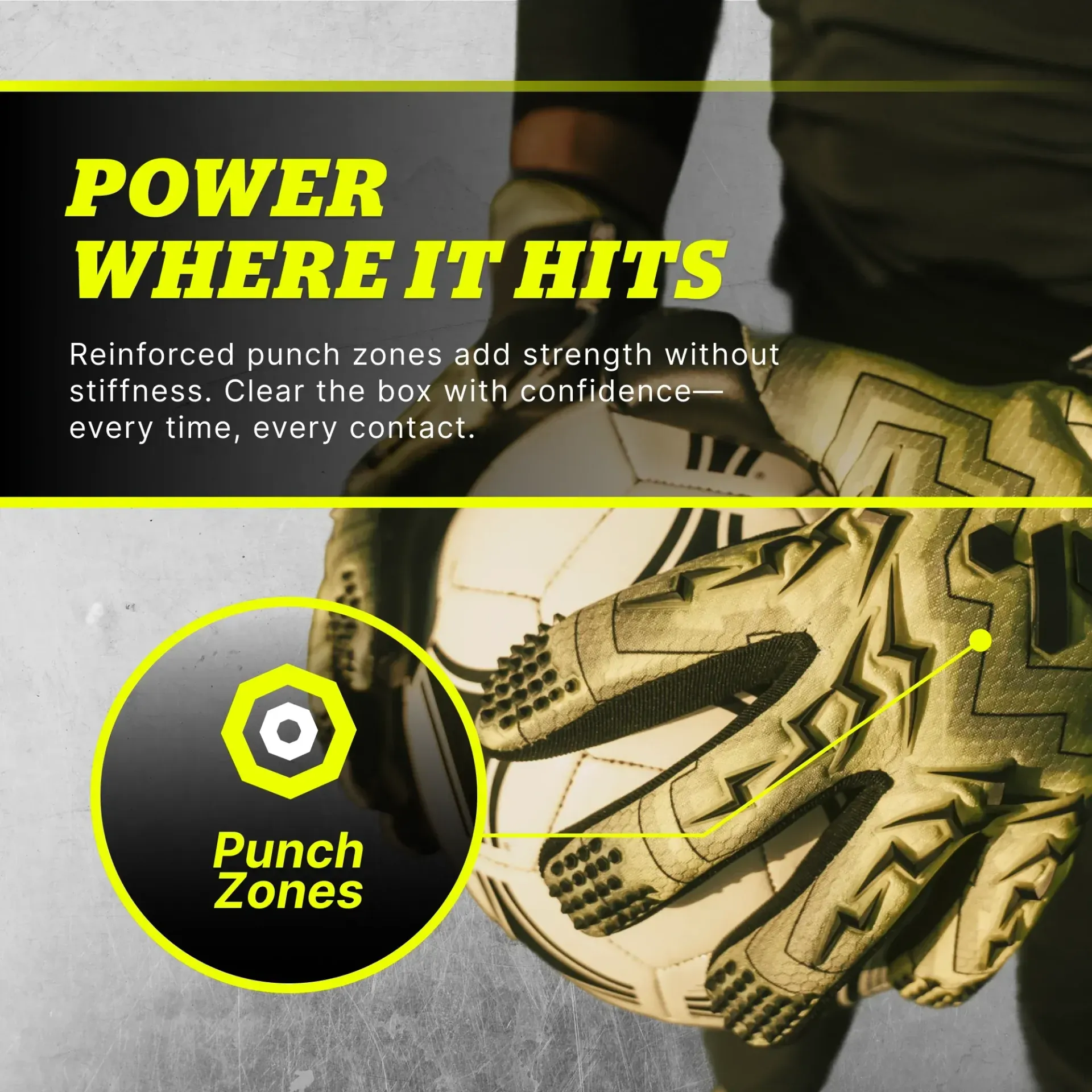
The Storelli Lightning GK Gloves are built for tough turf sessions.
You notice the difference immediately during dives. These gloves feel more reinforced than many lightweight match models. That added structure protects your hands better against hard artificial surfaces.
Some gloves chase ultra-soft grip but fall apart quickly. Storelli takes a more balanced approach.
Best For
- aggressive diving
- hard turf fields
- younger keepers
- heavy training schedules
- goalkeepers wanting durability first
Why Keepers Trust Them
Feature: Reinforced palm
Benefit: Better turf resistance
Feature: Protective structure
Benefit: Less hand pain
Feature: Durable latex blend
Benefit: Longer lifespan
Feature: Strong wrist support
Benefit: More save confidence
If you train four or five times weekly, durability suddenly becomes more important than flashy branding.
You can also browse advanced turf goalkeeper gloves online if you want models built specifically for artificial grass conditions.
2. Reusch Attrakt Freegel
Reusch gloves have earned respect among serious goalkeepers for years.
The Attrakt Freegel balances elite grip with surprisingly solid durability. That combination is rare because softer latex usually wears down faster.
The grip feels especially reliable during low reaction saves.
What Stands Out
- excellent dry grip
- comfortable finger movement
- durable palm feel
- secure wrist closure
Many goalkeepers searching for the best goalkeeper gloves for turf want one pair that works for both training and matches. Reusch handles that balance very well.
3. Uhlsport Absolutgrip
Uhlsport quietly makes some of the most trusted goalkeeper gloves in soccer.
A lot of experienced keepers actually prefer them over bigger mainstream brands because the gloves age well over time. The Absolutgrip model stays comfortable even during long seasons.
Some gloves feel incredible initially, then lose performance rapidly. Uhlsport usually stays more consistent.
Best For
- frequent training
- long seasons
- balanced grip
- all-around performance
Why Players Like It
- soft catching feel
- strong cushioning
- durable construction
- reliable grip consistency
That reliability matters when your confidence depends on your hands.
4. Adidas Predator Pro
The Predator Pro feels fast, modern, and lightweight.
Many agile goalkeepers love the tighter fit because it improves ball feel during reaction saves. The glove moves naturally with your hands instead of feeling bulky.
You really notice it during quick close-range stops.
Best For
- agile keepers
- reaction saves
- match-focused players
- modern glove preference
Key Strengths
- lightweight feel
- strong grip
- flexible movement
- clean ball control
The durability is solid, though not as tank-like as heavier turf-focused gloves. Good glove care becomes important here.
5. Puma Future Ultimate
Puma has improved their goalkeeper gear dramatically in recent years.
The Future Ultimate feels flexible, comfortable, and surprisingly durable for a lightweight glove. That balance makes it popular among keepers who hate stiff gloves.
Long sessions feel easier because the gloves move naturally with your hands.
Why Players Trust It
- flexible fit
- comfortable padding
- reliable grip
- balanced durability
Many goalkeepers overlook Puma entirely when researching gloves. That honestly makes this model underrated right now.
You can compare premium Goalie Gloves online before choosing the right fit for your playing style.
Match Gloves vs Training Gloves for Turf
This is where many goalkeepers accidentally waste money.
They buy one expensive pair and use it for everything.
Turf destroys soft match latex faster because of repeated friction. Experienced keepers usually separate gloves into two categories.
Training Gloves
Built mainly for durability.
Best Qualities
- tougher palms
- stronger stitching
- longer lifespan
- better turf resistance
Match Gloves
Built mainly for maximum grip.
Best Qualities
- softer latex
- cleaner catches
- lighter feel
- stronger ball control
If you train regularly, owning both usually saves money long-term.
Why Expensive Goalkeeper Gloves Sometimes Wear Out Faster
This surprises many players.
Expensive gloves often use softer latex because softer foam creates better grip. The downside is that soft latex also wears down faster on rough turf.
That does not mean premium gloves are bad.
It simply means you should match your glove type to your playing environment.
A $150 match glove used daily on artificial turf may wear out faster than a tougher mid-range training glove.
That is why smart goalkeepers think about usage first, branding second.
How to Make Goalkeeper Gloves Last Longer on Turf
Even elite gloves wear down quickly without proper care.
Simple habits make a huge difference.
Important Turf Glove Tips
- slightly dampen gloves before games
- avoid dragging palms during dives
- wash gloves after sessions
- air dry naturally
- rotate multiple pairs
- store gloves flat
A lot of goalkeepers accidentally destroy gloves through poor maintenance instead of actual gameplay.
Common Goalkeeper Glove Mistakes on Artificial Grass
Most turf glove damage comes from avoidable habits.
Mistakes to Avoid
- using match gloves daily
- choosing style over durability
- letting latex dry completely
- ignoring wrist support
- buying the wrong fit
- sliding palms unnecessarily
Artificial turf is unforgiving. Your gloves need to match the environment you play in.
Are Turf Goalkeeper Gloves Worth the Money?
Honestly, yes, if you play consistently.
Better gloves improve:
- comfort
- confidence
- grip reliability
- wrist support
- hand protection
That confidence changes how you play.
You attack crosses harder. You dive more aggressively. You stop second-guessing your grip during difficult saves.
Goalkeeping already demands fast reactions and strong focus. The last thing you need is equipment making you hesitate when the game speeds up and shots start flying from every angle.
Frequently Asked Questions About the Best Goalkeeper Gloves for Turf
What are the best goalkeeper gloves for turf fields?
The best goalkeeper gloves for turf usually combine strong grip with durable latex that can handle repeated dives on artificial grass. Models like Storelli Lightning GK Gloves, Reusch Attrakt Freegel, and Uhlsport Absolutgrip are popular because they balance comfort, protection, and long-term durability.
Why do goalkeeper gloves wear out faster on turf?
Artificial turf creates more friction than natural grass. Every dive scrapes the latex palm against rough synthetic fibers, which slowly damages grip and causes peeling or tearing. Softer match gloves usually wear down the fastest on hard turf fields.
Should goalkeepers use different gloves for training and matches?
Yes, many experienced goalkeepers use separate gloves. Training gloves are built for durability and repeated use, while match gloves focus more on maximum grip and ball control. Using one premium pair for everything often shortens glove lifespan quickly on turf.
How can I make goalkeeper gloves last longer on artificial grass?
Simple glove care makes a huge difference. Slightly dampen the palms before playing, avoid dragging your hands during dives, wash gloves after sessions, and air dry them naturally. Rotating between multiple pairs also helps reduce wear.
Are expensive goalkeeper gloves worth buying for turf players?
Premium gloves can improve grip, comfort, and wrist support, but durability depends on the latex type and how often you play. Serious turf goalkeepers usually benefit from higher-quality gloves because they provide better protection and more consistent performance during matches and training.


